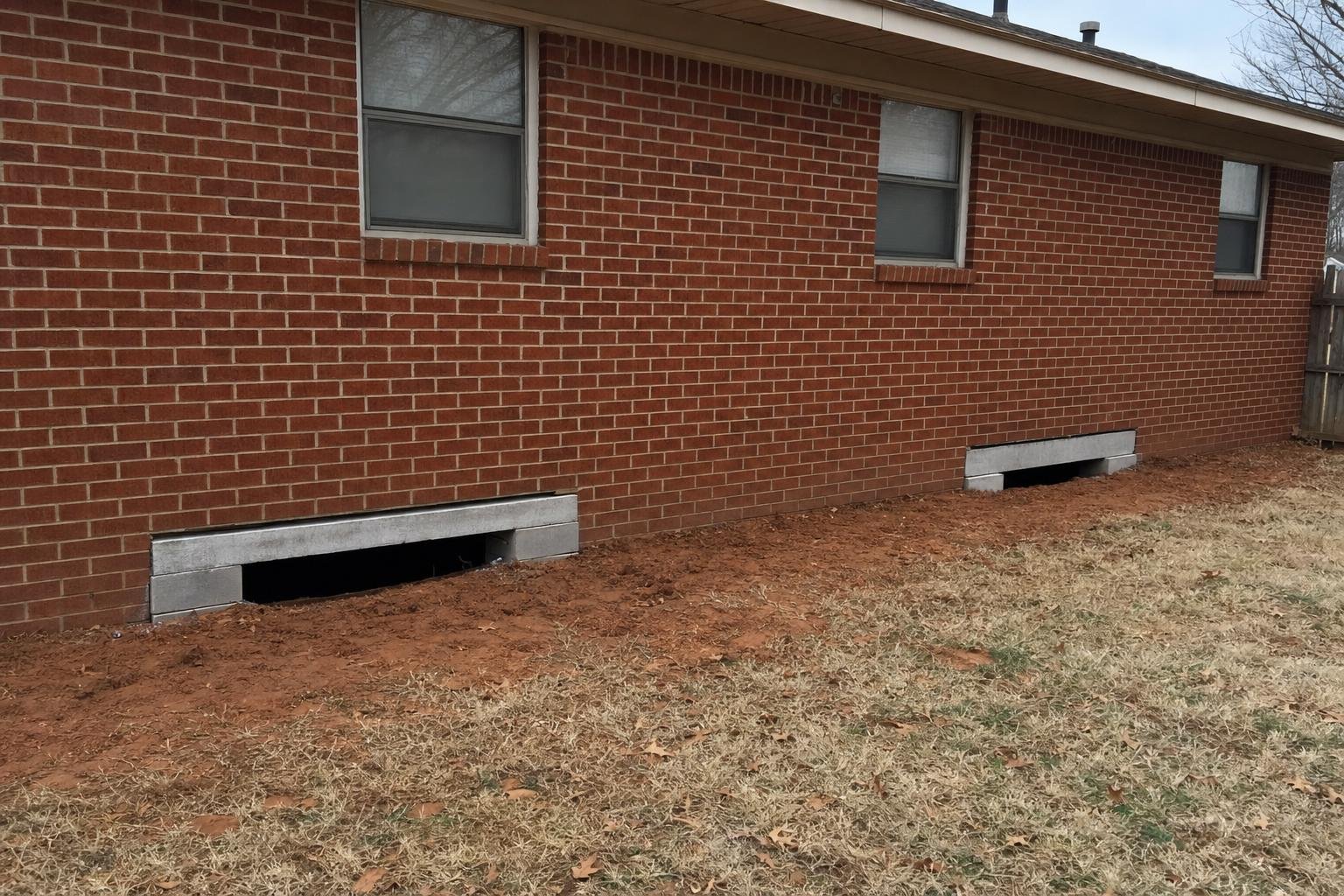
What looks like one problem from inside the house can have a different cause once we see what's going on underneath or behind the wall. This page walks through what those signs usually point to and how we sort them out.
What you're seeing when a slab goes uneven or a wall starts to bow
A slab that has settled unevenly usually shows up first as a gap under a baseboard, a door that starts sticking, or tile cracked along a line. A wall that is bowing inward tends to show a diagonal crack running from a corner, or you can sight down it and see it's no longer straight.
Both mean the structure has moved, but neither tells you what moved it or how far it has gone. An uneven slab can come from the ground under it shrinking or compacting. A bowing wall can come from pressure against it, from the wall losing strength, or from the house settling unevenly around it. We start from what you're seeing, look at how the whole house is sitting, and work out the cause from there.
For the hands-on side, see crawl space repair. Want foundation repair in Muskogee? Our home page covers it.
Watch where the water goes after a heavy rain
Muskogee gets periodic heavy-rain events, and they show quickly whether the drainage and grading around a house are doing their job. The Muskogee-series soil here has clayey sediments under silty material and drains slowly, so rain doesn't soak away the way it would in sandy ground. If water pools against your foundation after a hard rain, it is sitting there longer than you'd expect.
Water that stays next to the foundation keeps pushing on it and works its way into cracks and joints. When you tell us you've seen pooling that doesn't drain off promptly, we check the grading and where the water is heading as part of the assessment, alongside whatever is showing up inside the house.
Getting a proper look before deciding on a repair
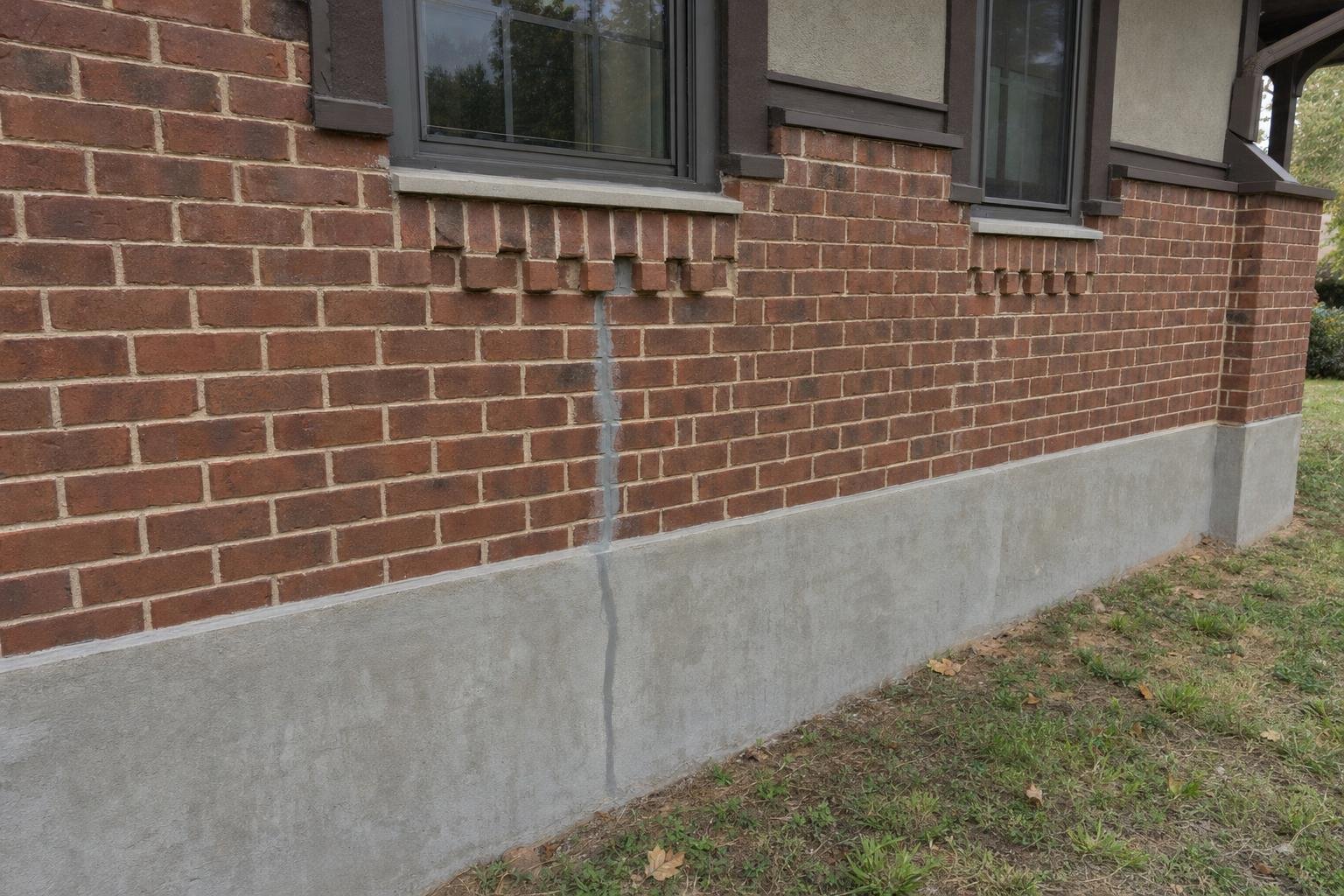
Not every crack needs one, but when a house shows movement that affects how it sits, we'll tell you if we think an engineer's look is the right next step before anyone commits to work.
On the repair side, a helical pier runs $2,100 to $3,000 installed when that's what the job calls for. Plenty of warning signs never need a pier. We can give you typical ranges like these on the phone, and the exact number gets confirmed once we've seen the house.
Different problems call for different methods
A settled slab can often be lifted with polyurethane foam injected through dime-sized holes. The foam fills the space underneath and brings the slab back toward level. We also run a cement-based slurry pump for slab-jacking, and which approach fits depends on what we find under the slab.
A bowing wall is a different job. We bond carbon-fiber straps to the wall to arrest the inward movement. Leveling a slab won't stop a wall from bowing, and strapping a wall won't lift a slab, which is why the method follows the diagnosis and not the other way around.
Confirming the structure came back within tolerance
When a lift is part of the job, we re-survey the house afterward and compare the readings to where it started. A closed gap or a floor that looks better isn't how we decide the work is done. The re-survey confirms the structure returned within tolerance, and you keep the numbers, which helps if the work comes up when you sell the house.
Straight Answers to Common Questions
Lifting a settled foundation back toward level closes most cosmetic cracks on its own. Any remaining hairline cracks are sealed once the structure is stable so they don't reopen.
Under a typical pier warranty, pier locations that move beyond the tolerance written into the warranty are re-leveled at no charge, so ask to see that tolerance and what triggers a re-level before you sign. Movement outside the repaired footprint is usually evaluated case by case.
Related Services
Straight Answers
Pick up the phone and run it by us, no hard sell.
Updated October 2026