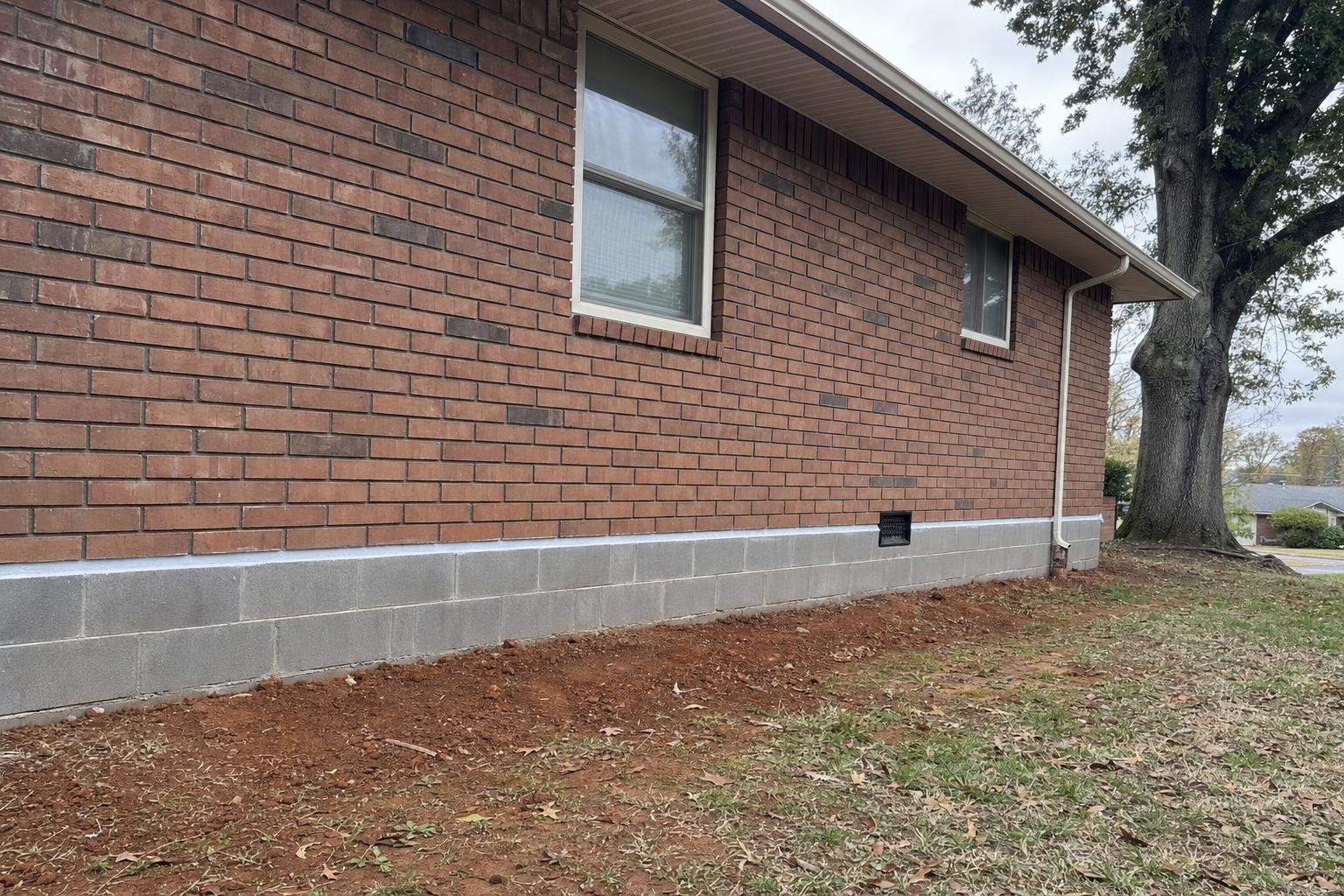
Some jobs level a slab in place, some stop movement with piers, and some end with sealing a crack once the structure is stable. We figure out which one your house needs by measuring it before we touch anything.
Does this repair require lifting?
Lifting is the answer to one specific problem, not the default for every job. If a slab has settled unevenly, we can often level the concrete with mudjacking or polyurethane foam. If a crack has opened but the structure underneath is stable, sealing it may be most of the work. If the house is still moving, we install piers to carry the load and stop it. Whether the house also comes back up depends on how far it has dropped.
We won't promise before an assessment that your foundation can be fixed without lifting. Once we have floor-elevation numbers and know what the house is bearing on, we tell you whether the plan is stabilization, leveling, or both, and what each step does to the structure. The scope follows the measurements.
When you are ready, crawl space repair is the place to start. Searching for foundation repair in Muskogee? See our home page.
Choose timing from conditions
Muskogee gets occasional winter freezes, and they bring some freeze-thaw movement in the ground around a foundation. We factor that into scheduling. When a freeze is forecast during an outdoor install, we go over the timing with you before we commit to dates.
You don't have to wait for a particular season to get an assessment or a scope. We measure the house, tell you what it needs, and set dates around the ground conditions when you're ready to go ahead.
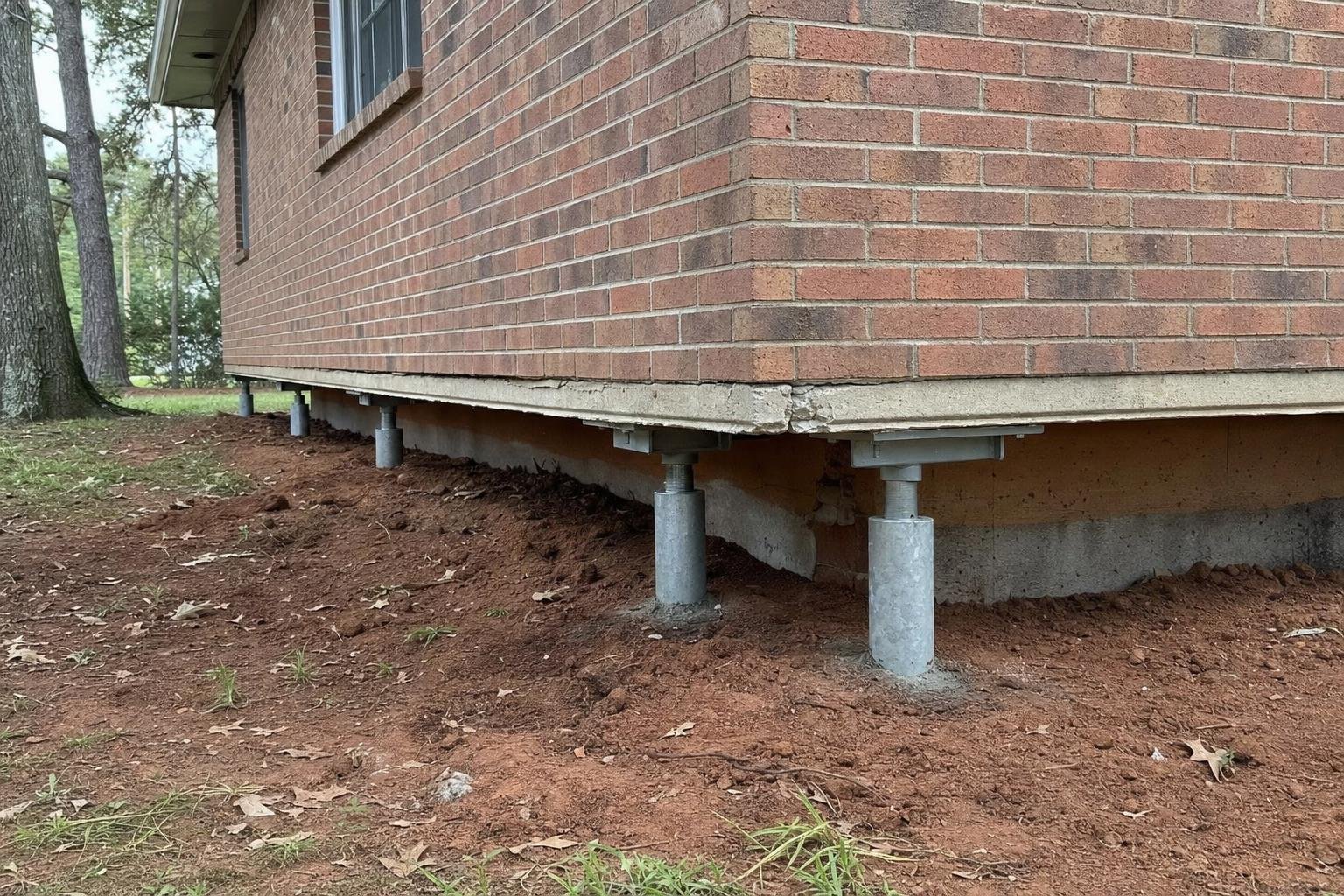
From initial survey to final sealing
Every job starts with a floor-elevation survey using our manometer kit. It shows where the slab or floor framing sits relative to level, and we build the repair plan from those readings.
Where push piers are the right approach, we drive them in sequence to refusal on a load-bearing stratum. Where helical piers are the better fit, we log the torque-to-capacity correlation on every install, so you have a field record of what each pier developed, not just a design number. Slab leveling, when the job needs it, is its own step.
Crack sealing comes last. We wait until the structure is stabilized and the readings confirm it has stopped moving, because a sealant applied over a crack that's still shifting will fail.
Compare the leveling options
When a slab needs to come back to level, we use one of two methods.
Mudjacking pumps material under the slab to raise it, and it runs about $2.50 to $5 per square foot of slab. Polyurethane foam, the other option, costs more per square foot and covers a much wider range, depending on how much fill the slab needs.
Those are per-square-foot costs for leveling only. If your job also needs piers or crack sealing, those are added to the scope. Describe what's happening in your house when you call, and we'll quote a typical range for that kind of leveling job right then. Your final price comes after our manometer survey of the house.
Agree on a scope-specific schedule
How long the work takes depends on the method, the square footage of slab or number of piers, how easy it is to reach the foundation, and what we find once we're in the ground. A leveling job is shorter than a perimeter pier install where we log torque on every pier. Crack sealing comes at the end, after the structural work is done.
We give you a schedule once the scope is set. Call us and we'll come out, run the elevation survey, and give you a scope and a timeline built from your house's measurements.
What the Job Includes
Spelled out, some of the details:
- Polyurethane foam injected through dime-sized holes to level a slab
- Carbon-fiber strap bonding to arrest a bowing wall
Frequently Asked Questions
When a foundation settles unevenly, the frame of the house racks slightly out of square, which binds doors and windows. It is one of the earliest noticeable symptoms of movement.
Slab-jacking (mudjacking) lifts a sunken concrete slab such as a garage floor, driveway, or patio by pumping a cement-based slurry underneath it. It is a fast, lower-cost fix for slabs that have settled but are otherwise sound.
Related Services
Straight Answers
A short phone call is enough to start, and you'll get a straight answer.
Updated October 2026