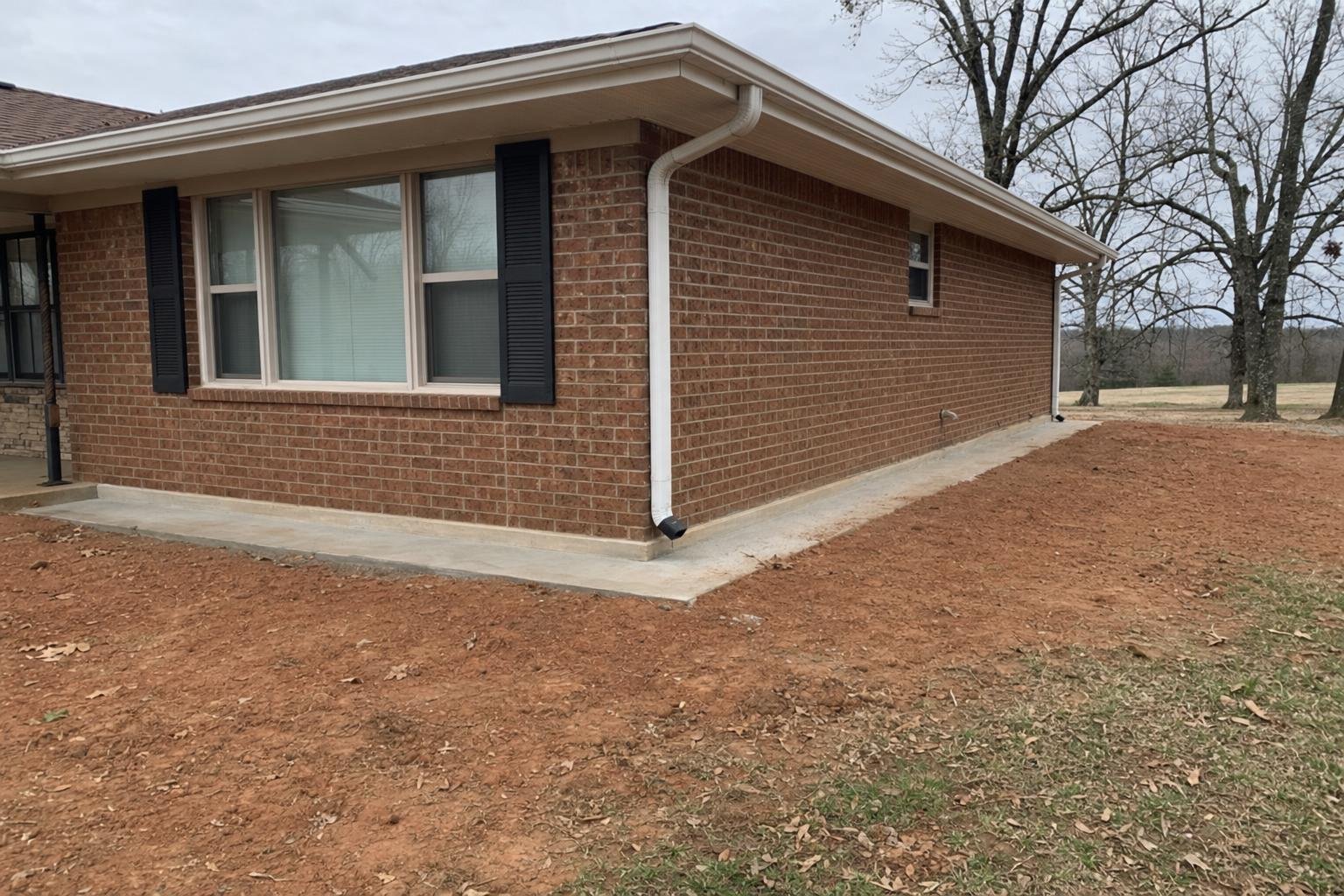
Two of the most common pieces of work, foam leveling and epoxy crack injection, are priced in completely different ways, and neither one is the cost of fixing a whole foundation. Here is what each covers, what it costs, and how we work out which one your house needs.
What It Costs
Polyurethane foam leveling runs $4 to $20 per square foot. We use it to raise a concrete slab that has dropped. Because it's priced by area, the size of the settled section drives the total, and the wide range per foot comes from how much the slab has to be moved and how much foam it takes to get there. If you call with an approximate size of the area that's dropped, we can tell you roughly where in that range you're likely to land.
The service behind this guide: crawl space repair. Need foundation repair in Muskogee? Our main page lists everything.
Epoxy crack injection: per crack
Sealing a foundation crack with epoxy injection runs $250 to $500. That price covers one crack, not the foundation. A slab that needs leveling and a crack that needs sealing are separate line items on our quote, and a job can have one, the other, or both.
Why we look before we give a final number
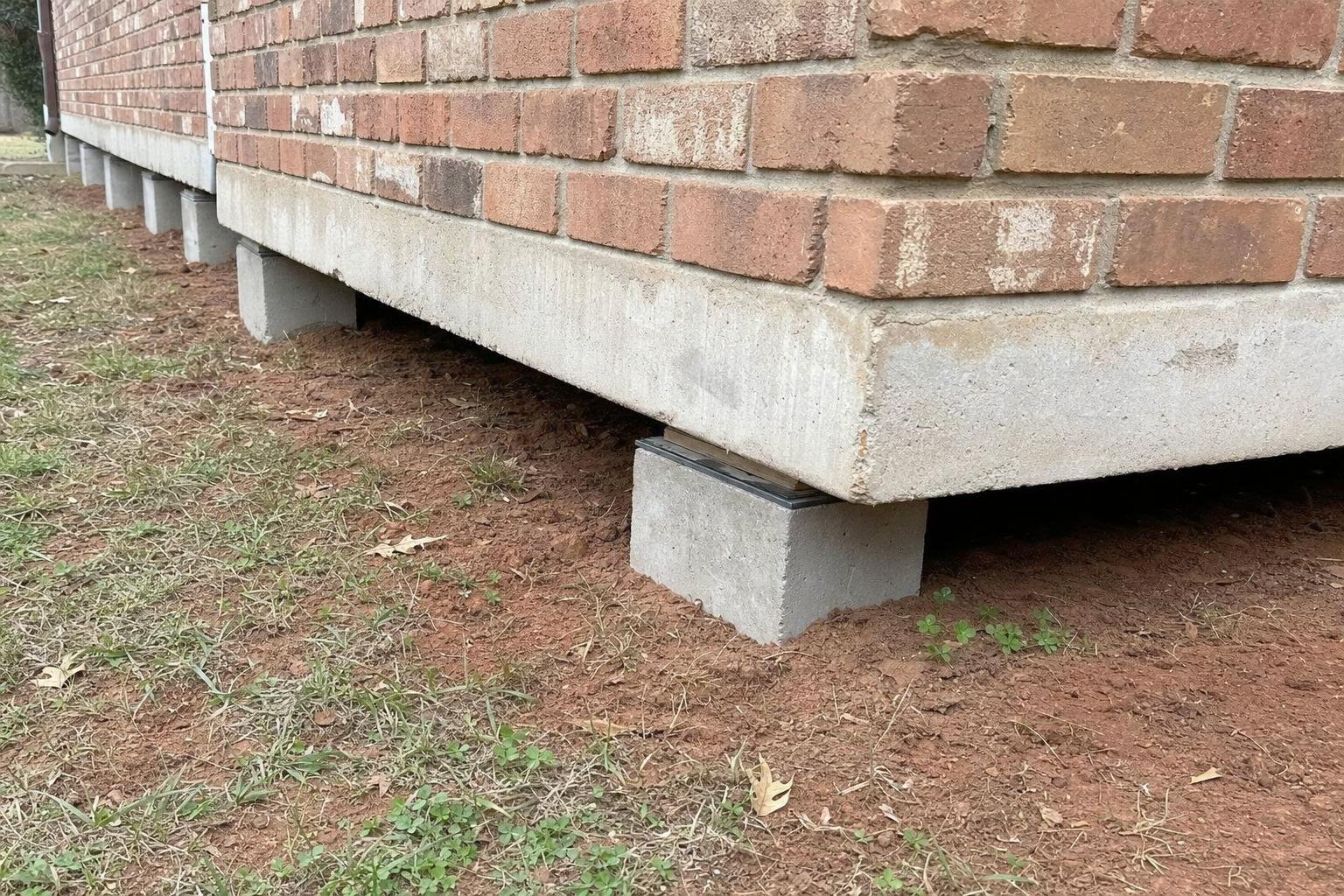
Muskogee County has high-clay Vertisols, which shrink when they dry out and swell when they get wet. That movement is what pushes a lot of foundations out of level and opens cracks here. It doesn't run the same on every lot, though, which is why two houses on the same street can need different repairs. When we come out, we're figuring out whether your house needs a slab leveled, a crack sealed, the foundation stabilized against further movement, or some combination, because each of those is priced differently.
Stabilization: push piers and helical anchors
When the foundation needs underpinning, we drive push piers in sequence until they reach refusal on a load-bearing stratum. In plain terms, each pier keeps going until it's sitting on ground solid enough to carry the house. How deep that is depends on the lot.
For lighter structural loads, we use a round-shaft helical anchor instead. Which one your house gets depends on the load it's carrying and what we find underneath it, and our quote names the method and the number of piers or anchors so you know exactly what's being installed.
Checking the work before we call it done
After a lift, we re-survey the structure to confirm it came back within tolerance. If it didn't, the job isn't finished.
We also hold off on final crack sealing until the structure is stabilized. Sealing a crack while the foundation is still moving just gives it a fresh place to open back up, so the last seal goes on once the house is sitting where it should.
Getting a price
Give us a call and describe what you're seeing: a dropped slab, a crack, doors that stick. Using the ranges above, we can give you a typical range for that kind of work on the phone. The exact number gets confirmed once we've seen the foundation and know what it actually needs.
What to Expect to Pay
These ranges are here to help you budget, and yours gets its own written price once we've seen it.
$1,850–$7,000
$1,300–$2,100
$2.50–$5 per sq. ft.
Good to Know First
Structural repair and water control are related but separate. Sealing cracks helps, but persistent basement water usually also needs drainage measures such as interior drain tile and a sump system.
A proper estimate includes a walk-through of the symptoms, a manometer or elevation survey, and a review of soil and drainage conditions, followed by a written scope with pier count, method, and price. Be cautious of any quote given without measuring the differential.
There is no fixed depth. Piers are advanced until they reach soil or rock that can carry the load, which can be a few feet or more than thirty depending on the site. A soil bearing test sets the target before installation.
Related Services
Fast Scheduling
A quick call is a fine place to start, and there's nothing to sign.
Updated October 2026